Well, by the time I finish this post, it will not have been 2 months since my last post. So what of this title? A few months ago, I was listening to a podcast of Rick Shiels, whose pods refer mostly to golf, as he is a very good amateur player, an avid fan of golf who watches it constantly (more than me even), and a diligent student of the game who has relationships with many of the participants and media. During this specific podcast, Rick and his co-host, Guy Charnock, decided to discuss the topic of the “Mt, Rushmore” of sports. I don’t remember from whom they got the idea (maybe I can go back and find the relevant pod, but he does them so often that it will be difficult). I don’t think I need to explain to anyone what Mt. Rushmore is. He and Guy had a discussion trying to identify (according to them) the 4 greatest athletes ever. Now Shiels is a Brit, so I suspect his knowledge of baseball is quite limited, and he probably has only passing interest in American football and basketball. So they focused mostly on golf and futbol (soccer), but, interestingly, Rick proposed Serena Williams, and I believe Michel Phelps’ name came up. Anyway, this got me thinking that this could be an interesting topic for the blog. I even discussed it with one of my great friends, who not only agreed with the idea, but he went as far as to provide his list on his own blog. Now it’s my turn. Here’s how I’m going to do it. I will have an entry for the sports of baseball, football, basketball, hockey, golf, tennis, soccer, and possibly miscellaneous (other sports). Likely, each sport’s entry will have 5 – 8 names with some dialogue associated. I will limit it to professional sports, although I might have a few exceptions in the miscellaneous category. After I complete all of the entries, I will identify whom I think are the 12 greatest athletes of all time. Trying to limit to 4 isn’t possible for me (I don’t know if I can even limit it to 12, but I’m going to try). and there are a lot more athletes than there are U.S. presidents, so I feel that it’s OK to have a bigger mountain. I will use the following criteria: 1) the statistics, 2) dominance relative to the player’s competition, 3) the circumstances under which the athlete performed (this criterion will become clear during the discussions), 4) what I observed (either live, on TV, or on film), 5) the opinions of relevant individuals (where it applies). I will start with baseball and maybe football also in my next post, but it’s late so I’m going to end this post and leave you hanging for a bit.
Damn, I hadn’t realized that my last post was 2 months ago. Oops. Well, my life has been pretty busy, and I have spent lots of time playing golf (April and May were very rainy here, which restricted my ability to get on the course and driving range, so I had more time to post), but there are no excuses. One problem I have (sorry if I said this previously) is that I usually think a lot before I post and usually write it out on paper before I enter it here. I also sometimes choose topics that are complex, and I do research and think about as many angles as possible before I post. This can lead to long and word-heavy entries. So I’m going to try to make some of my posts shorter and more off the cuff and mix those in with the weighty ones.
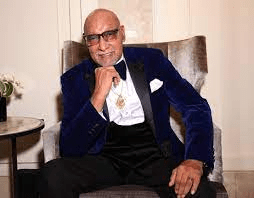
I heard some very sad news last Monday. Abdul “Duke” Fakir, the last living member of the Four Tops, died. He was 88. Here is a recent picture of Duke, courtesy of the LA Times.
Most of those who know me also know that The Four Tops are (maybe were at this point) one of my favorite musical acts, and they are my favorite Motown act (The Temptations are a close second, and there are many others that I like a lot). Most casual music fans probably know “Reach Out (I’ll be There)” and “I Can’t Help Myself (Sugar Pie Honey Bunch),” which were the Tops’ 2 biggest hits. But they had about 20 additional hits, and what made them great, IMO, was the consistency they had over the years. I mean they almost never had a bad record (a couple of exceptions were “Mc Arthur Park,” which maybe wasn’t that bad, but I think it’s a bad song and was a mistake to record it, and “Catfish,” which was an attempt at disco and just isn’t up to their high standards). Hell, even when they left Motown in 1972, they immediately had 3 big hits (“Keeper of the Castle,” Ain’t No Woman Like the One I’ve Got,” which became a classic, and “Are You Man Enough”). They had one last hit in late 1979 (When She Was My Girl, which went to #1 on the R&B chart and #11 on the pop chart). Of course, having Levi Stubbs as your lead singer helped quite a bit, but the background singers (Duke, Renaldo “Obie” Benson, and Lawrence Payton) were also consistently excellent, and it didn’t hurt having the Funk Brothers behind them for most of their hits. They were inducted into the Rock & Roll Hall of Fame in 1990.
In late 2022, I attended a concert featuring the Four Tops and The Temptations (who still had original member Otis Williams performing). It was nostalgic, but it was also a helluva show. The band was terrific, and both groups sounded pretty close to the originals. At age 86, Duke had to sit down a few times during the show, but his voice was still strong. He even did a solo; a modified version of “My Way” which was very touching. I didn’t sit down during the show except for the intermission.
I don’t know if The Four Tops will continue to perform now that Duke is gone. Roquel Payton, son of Lawrence Payton, was part of the group, so there is a link to the past, but I don’t think it would be the same anymore. Anyway, thanks to Duke Fakir for providing me with one great memory, and thanks to The Four Tops for enriching my like and I suspect many others as well. RIP Four Tops.
OK. so it’s been a few weeks since my last blog post. What happened? Well. life got busy (appointments. grandkids, etc.). I finally got to go away for a weekend (after it had to be postponed). And, if I’m being honest, golf started for me. I recently took my first lesson in a while, and I’ve been spending (lots of) hours trying to learn a new swing. I have been working on some new content, but it’s not ready yet (I think I’m trying to be an editorial writer rather than a blogger sometimes). So in the meantime, here’s what I decided to post. I had begun to write a “memoir” a couple of years ago because I saw that a few others that I knew had done it, and I thought it was a good idea. It too needs work, but I wrote some entries toward it, and I’m going to present one today. I’m trying not to make it a straight biography, but I’m focusing on incidents from my life that I remember and/or helped to define me. So I hope you’ll consider reading this one; it was the first biographical entry of hopefully many.
I decided to start my memoir with my earliest memory. For reference, I was born in 1960. The oldest memory of my life was the assassination of President John Kennedy. As you probably know, it occurred on November 22, 1963, so I was 3 1/2 years old. The memory I have is being in the living room of our duplex apartment (this I will attempt to describe down the road) watching TV with my mother when a newscaster (I want to say it was Walter Cronkite; I’m not sure of that, though he certainly was on the air reporting on it) was saying that President Kennedy was dead. Interestingly, I only remember the part about the President being dead and very little about the shooting itself. I don’t know why that is, but I was kind of young at the time.
Now, you may be thinking; did he really remember this tragedy when it actually happened? The incident is so strong in my brain that I certainly believe that I did. I absolutely believe it is possible that a person of this age could remember something of this magnitude. And again, the only clear information I remember was that I was watching TV, my mother was there, and that a person said multiple times that Kennedy was dead. I have no clear memory of the time of day, but I’m pretty sure it was before dinner, and I don’t remember my sister being there, so it likely was early to midafternoon (I know now that President Kennedy was pronounced dead at about 1 PM CST, and it was a Friday; thanks Wikipedia). I have no idea what TV show was on when the news broke.
So maybe there is some doubt as to whether I really remember this tragic day. Perhaps I dreamed it a little bit later in life, or maybe I watched a program related to the killing later in life (this is absolutely true; I suspect most of us have). I’ve told my wife about this memory, and she is quite skeptical. Of course, when my mother once stated that I could read maps at age 2 (and I was an avid collector of maps when I was young, and they were free at the gas station), my wife practically burst out laughing. In this case, I don’t believe it either, although I most definitely was fascinated by and did stare at maps a lot. I suspect that I could actually read them by age 5 or 6. All this being said, the imprint in my brain is so strong and remains so at age 64 (hoping that this means that dementia is still a few years off), and the people who know me well will attest to my very good memory skills (play any song that was on the radio from about 1957 – 1975, and the is a 98% chance I will know the title and performer/group within 10 seconds), that I consider it likely that I actually do remember watching the JFK assassination when it happened.
There will be more of these posted sporadically in the future. I hope you find them somewhat interesting. Those of you who know me might learn something about me you didn’t previously know.
First of all, I need to make a couple of corrections and 1 addition from my previous post. I misspelled the Masters champions’ name. It’s Scheffler, not Sheffler (I should have known this). And after his win at Augusta, he had won 3 of his last 4 tournaments, not 4 of 5 (although he had four 2024 wins total at the time). However (and not surprisingly), he just won again this past weekend. So now, 4 of 5 is accurate (and amazing). And speaking of amazing, LPGA golfer Nelly Korda just won the first women’s major tournament. She has won the last 5 events in which she has played (take that, Scottie). While I’m not sure that this level of dominance is good for the sport, both of these players are playing golf at an insane level.
Now, on to the main topic (another unplanned one). I just read an article on the April 22 online version of NPR (let’s not get into NPR’s issues; this article is not political or biased, IMO) which stated that there was in 2023 a 16% increase in the number of young people opting for vocational/technical/professional schooling and/or training over traditional 4-year college. They interviewed several individuals in the article, and each of them seemed satisfied if not happy with their choice.
My initial response to this article was, “This is great news!” There is a substantial need for these types of skilled technicians and professionals, such as welders, HVAC technicians, electricians (to fix the grid, of course), and dental hygienists, to name a few. Some of you may know that in much of Europe, students are evaluated by the government as they are completing what we would refer to as high school. People with the highest ratings are invited to attend traditional universities (for free or very low cost, BTW); those who do not qualify are offered vocational/technical/professional education or apprenticeships as career training. There may be some who qualify for neither; their options are to repeat schooling and retest or to find other more less skilled employment. Many of these more vo-tech professions, which were looked down upon by many US high school graduates in the past, are gaining favor with them nowadays, as these careers pay decent to very good wages, and most come with medical and retirement benefits. And many offer career advancement or even the opportunity of starting a business of their own. If nothing else, this path should give young people more hope of achieving financial independence than they may have had in the recent past. Sounds great, yes?
Well, I have a couple of concerns after reading the article. The first one is that all of the individuals presented in the article stated that they initially chose the vo-tech pathway because of the prohibitive cost of traditional college and the fear of significant debt if making that choice. While in a way I applaud them for making a financially sound decision, it’s disappointing to me that the decision was largely if not entirely a financial one. I was hoping that at least one of the people profiled in the article had said something like (and I’m paraphrasing here), ” You know, I wasn’t sure that a traditional college education was right for me at the time I graduated from high school, and I found some interesting career options at the local vo-tech college, so I went there and received some interesting and valuable training in (insert skill), and I was able to get a good paying job right away. I enjoy the work, it pays better than I expected, and I have pretty good benefits. And I can always go to college in the future if I think it can help my career.” Of course, a quote of this length would never make it verbatim into an online article, but you get the point.
Let’s face it, the traditional college setting isn’t for everyone, and I think there are lots of folks attending 4-year colleges and universities that probably don’t belong there. Also, these days, having a Batchelor’s degree doesn’t guarantee one employment post-graduation. Frankly, it never did entirely, but it was certainly more likely to lead to a positive outcome 30 years ago than it is today. And I applaud the Biden Administration for removing the requirement of a Batchelor’s degree for thousands of Federal government positions. That policy gives even more people the chance to secure a good-paying job with benefits. But that being said, I am disappointed that many young people are going the vo-tech route because they can’t afford the alternative.
This leads me to a second related point, that being the need for college graduates in many fields, in particular STEM (science/technology/engineering/math in case you didn’t know), public health, and nursing (I don’t think the last 2 count as STEM, though they are not easy pursuits). Interestingly, according to the National Science Board, there has been a significant increase in the number of students majoring in STEM in the 21st century (the study covered 2000 – 2019). Despite this, there has been a gradual but much slower increase in the amount of STEM degrees issued; this being the case because the graduation rate of STEM majors is only about 40%. Additionally, the demand for individuals with STEM degrees continues to increase, with an expected 9% increase in demand between now and 2028 (per the National Labor Relations Board). But given the challenges we face (AI, strengthening the grid, trying to combat global warming, feeding the planet), the need for top talent in the STEM fields is greater than ever.
Now let me be clear about something; though it may work for some countries, I’m not advocating that we adopt the European system and have the government decide who goes to college and who can’t. Vo-tech careers aren’t only for people who aren’t “good enough” to get into a traditional college; some of them require considerable skill. As far as I’m concerned, if the smartest person on the planet wants to be a car repair technician or a Physician’s Assistant, then he/she should go for it. As I said earlier, traditional college isn’t for everyone, and of course you can always choose to get technical training now and attend college later if that’s your preference. So I applaud and appreciate those who have decided to forego a 4-year degree and pursue a career as a skilled technical or professional person. We need more of them, and the US needs to expand the number of vo-tech schools and apprenticeships to meet the demand. And these careers provide interesting and challenging work, in addition to good wages and benefits. But it is unfortunate that due to the cost of higher education in the US, many young adults see vo-tech as their only viable option to financial security, and some of them could be excelling in a traditional college setting if cost weren’t a barrier. We as a country need to address that. Maybe I’ll give my thoughts on this one in a future post, but I think I’ve written enough for now.
This one was unplanned, but I’ll try to keep it shorter than the previous 2.
Everyone who knows me (including the handful of you that may be following this) knows I really like golf (and have since I was about 12). Now that I’m retired, I get to play more than I ever have. I’m in 2 senior leagues (9 holes 2x/week, and I don’t use an electric cart). I also watch golf a lot. I watch the new rival LIV Tour more than the establishment PGA Tour. LIV has only 14 events per year and my favorite player, Harold Varner III, plays on LIV (I wrote a post about him ~ 5 years ago that you can read if you want to know why Ilike him). I also always watch the 4 major championships, and The Masters tournament was played this past weekend. For those non-golf people (probably most of you), please consider reading this entry, as most of it does not directly discuss the tournament played (there is some of that) but it covers my thoughts about the venue and a rather famous player (see title for teaser).
Despite its prestige, I have issues with the Masters, mostly due to the venue that hosts it. It is the only major championship in golf that is played on the same course every year (the others rotate courses). The Masters is played at Augusta (GA) National Country Club, and it is one of the final remnants of the Old South. The vast majority of African Americans on the grounds are the “help” (food service, grounds cleaning, etc.). In fact, the first Black player to qualify for The Masters (per their own rules), Charlie Sifford, was told he was not welcome to play. This was 1966. The Club finally relented in 1973, when they allowed Lee Elder to play. It wasn’t until the 21st century that women and people of color were granted membership. There are now a few token members from those groups (Condoleezza Rice being probably the most noteworthy).
The golf course is beautiful (so I’m told; I’ve never been), or at least it looks that way on TV. However, they add blue dye to the creeks and ponds on the course, and most of the bird sounds heard are pre-recorded and played through speakers dotted throughout the course. And they have many arcane rules that the broadcasters and spectators (whom the broadcasters must refer to as “patrons” or risk being banned for life) must follow. I won’t go into any more detail about the rules but take my word for it; no one under the age of 80 understands why they exist. They also have the weakest filed of any major tournament (and weaker than several non-major events) because they limit to about 90 players (vs. the 150 or so for the other majors), and at least a dozen of those are past champions over the age of 60, who are qualified for life and have zero chance to contend, much less win.
It usually does, however, provide compelling golf, and this year was no exception (you can skip this paragraph if you don’t care about these details). It was quite windy on Thursday and Friday, which made life difficult for the participants. And by Sunday afternoon, there was a 4-way tie for the lead with 10 holes to play. And 3 holes later, the tournament was essentially over. Three of the four players tied for first made critical errors, leaving the undisputed number one player in the world, Scottie Sheffler, on top. And he played the last 10 holes nearly flawlessly, ending up on top by 4 strokes. It was his 4th victory in his last 5 events (he finished 2nd in the one he didn’t win), and he now has a second Masters victory (he also won in 2022). He is on track to have the greatest season in the history of golf if he keeps this up.
Which brings us to Tiger Woods. He came to Augusta having played 24 holes of competitive golf in 2024 (one tournament where he withdrew in the second round). If there is any tournament in which Tiger could conceivably compete, it would be this one. He has won The Masters 5 times, including his last victory on the Tour (in 2019). He knows the course by heart, and the layout fits his game. And sure enough, for 2 days, he had the media and fans going berserk, playing well both days. At the end of his round Friday, he was at 1 over par, which easily made the cut (which was 6 over par, players with a score higher than that didn’t play the weekend or get any prize money) and put Woods in the middle of the pack. Some people (not including me) went to bed on Friday night with visions of a Tiger miracle. But then, Saturday came, and as he had in previous years, he completely fell apart, shooting a disastrous 10 over par round of 82, equaling his worst ever as a pro. To his credit, he played the final round (he had withdrawn the previous 2 years) and improved to a round of 77, which landed him in 60th place out of 60 golfers who had made the cut. It wasn’t pretty.
Now look, I know Tiger has had some serious injuries (albeit of his own doing), but what is he trying to prove by attempting (and mostly failing) to compete at the highest level?
I can’t say for sure (I don’t know the man), but those of you who are sports fans have seen this before. He is still the biggest name in golf, and he is adored by both the media and the fans (oops, I mean patrons) whenever and wherever he shows up. And that’s it; he craves the attention and adulation. It’s no different than other great players who hang on too long and look bad doing so (like Willie Mays’ last season as a New York Met or Michael Jordan playing out the string as a Washington Wizard). But unlike some of the others, I have no sympathy for Tiger Woods. He had it all. And then he dumped on his supermodel wife and was mostly an absentee father until his kids hit adolescence (now he takes them everywhere). Like many, I was a huge fan of Tiger until he showed his true stripes. No amount of rebranding his image (and there has been lots of it) will change my opinion of him at this point. Woods was 100 time greater a player than my guy Harold Varner (who, it so happens, is also black) will ever be, but he isn’t 1/100th the person.
I do, however, feel for him in one regard. I agree with sports journalist John Feinstein (he’s covered Woods extensively and has interviewed him) who said (not an exact quote) that Tiger Woods wasn’t, isn’t, or ever will be truly happy in life. His behavior is consistent with that assessment. And that’s sad.
Off-topic intro. The total eclipse was a total bust in upstate NY. It was cloudy the entire afternoon, and, though it did get very dark for 3 1/2 minutes, we saw none of the amazing sights that many others did. I’m very envious of those in the path of total eclipse who had clear skies this past Monday. Sorry, I just had to vent.
In this post, I am going to discuss a book I recently listened to on Audible (and subsequently bought a paper copy). I will provide a modest summary of the book and some of my reactions to it. Hopefully, I will be able to hold your interest.
The book’s title is The Grid by Gretchen Bakke, Ph.D. As you may have guessed, it pertains to our electrical grid. Please continue reading this post; this isn’t going to be a science lecture (and neither is the book). The only hard science discussed (and not at great length) is first, the difference between electric circuits running in series (the very first ones, which electricity from a single source passed through a single wire and were limited in their coverage) vs. those running in parallel (electricity originating from a single source passing through many wires at once, which allowed for significant expansion of the grid). The other physics covered is the difference between direct current (DC) and alternating current (AC), the difference being that DC can only traverse a relatively short distance before petering out, whereas AC can travel much greater distances through the use of transformers. They are explained in a way in which most lay people can understand. Now I say this as a person with an advanced degree in science. Not a simple major, but I’m no engineer. Nor is the author (her Ph.D. is in cultural anthropology).
The book contains the following topics (which I will tough on as briefly as I can): (i) history of grids and expansion of large grids throughout the US (ii) a few laws which changed how grids operated and were regulated (iii) the grid’s vulnerability, including a discussion of a few major blackouts. Interestingly, many are not weather-related (iv) the benefits and issues of modern methods of electricity generation (nuclear, wind, solar) (v) the beginnings of movement away from a large, interconnected grid and what the future might look like (note that the book was published in 2016 and though there have certainly been technological advancements since them, the book is quite relevant, IMO).
Now if you think about it, the way in which we are able to safely and reliably use electricity is pretty amazing. These days, we take the use of electricity totally for granted. However, electricity has become available almost everyone only in the last 75 years or so. Early grids (Edison deployed the very first one) were tiny and were employed mostly for manufacturing, street lighting, and public transport systems. With the passage of time, people/companies who had the money and know-how developed increasingly larger power plants and grids to provide electricity to home and apartment dwellers (though regulated by state and the federal government, there are very few municipally owned suppliers of electricity). More recently, with the increase in green technology, people can now generate their own power, which is most often fed into the existing grid but gradually is being used by individuals, along with generators and battery power, to become independent from the grid.
As you can imagine, operation of an electricity grid for an entire nation is not trivial. Power is coming from multiple sources. Ensuring that sufficient electricity is available to keep everything smoothly from 6 AM to 10 PM (when the need is great) and then dealing with the dropoff overnight (you see power coming in need to be balanced with power going out) is not easy to manage. The grid, like other facets of infrastructure, is fragile, with old wires, wood poles, and outdated computer systems. And furthermore, the grid is susceptible to the weather, of course. In case you were wondering, the two most frequent causes of power outages are tree limbs and (get ready for it) squirrels chewing through wires.
So, what was my motive for tackling this topic? Maybe I am hoping to educate/inform someone, maybe even enough for that person to want to read the book. And as you can see, I enjoyed the book enough to write multiple paragraphs about it. Having said all of this, reading this book made me more concerned, worried, and disappointed than I was before I started the book. Why?
My suspicion is that this book has not been widely read (my internet search didn’t unearth sales of the book). And I suspect that if the book were offered to the masses for free, the vast majority would turn and run (too nerdy). I know this book isn’t for everyone, but understand that without a properly functioning grid, we would have no lights, no internet, no A/C, and most businesses would shut down. Imagine that world for a couple of weeks, especially in the summer. It’s one of those things that no one cares about until disaster hits.
Given how important the grid is to our lifestyle if not existence, why is the grid never talked about by the populace, the media, or the politicians (to be honest, these days, I suspect very few of them could carry out an intelligent conversation about it)? I mean, an infrastructure bill was passed in 2022, and improving the grid was essentially not mentioned. Of the $1.55 trillion to be spent in the approved legislation, only about $25 billion (or about 1.6% of the total, this according to The Council of State Governments website) was allocated to improving/fortifying the grid. If this book in any way approximates the true state of the grid, that figure should have been more like $100 billion. While roads and bridges are critical for our society, they aren’t the only components of infrastructure.
This year, we are electing a President, dozens of Senators, and the entire House of Representatives. Yet it is quite unlikely that any questions related to the quality, dependability, safety, and security of the grid will be asked of any of the candidates. Part of this is due to the fact that an issue like this one does not elicit sexy (for the media) sound bites. But it’s also due the voters’ lack of knowledge and lack of desire to due and research or critical thinking (I could say this about other similar issues). I want our leaders to stop the culture wars and focus on the less glamorous but more important issues that ensure the safety, comfort, security, and prosperity of our nation and for voters to hold these individuals accountable. Sorry if this came off as a rant or was too preachy; I hope some of you got something out of this post.
This one’s going to be pretty long, so bear with me. But if you are a reader who either currently lives or has lived in Baltimore, you will understand. Some of this post will be based on my memory, so if I make any misstatements, please comment and correct me.
I was born and grew up in Baltimore. I left in 1986 with my then fiancée (now wife of 37 years), although I commuted from Delaware to UMBC for almost a year (almost 80 miles each way, ugh!). I have moved multiple times since, spending the last 19 years in upstate NY. When the kids were young, we visited B’more 2 or 3 times a year. As everyone aged (and the kids’ grandparents passed on), the visits became less frequent, but recently I have made an effort to visit with some frequency. There have been some funerals, and I want to see family and friends who still live in and around town.
I am now going to talk about Baltimore at some length (this post is really more about the city than the recent tragedy, although I’ll get into that toward the end). For those of you unfamiliar with Baltimore, it was an important as well as populous city. The port was even more important 60 years ago than it is now, although obviously the port is still relevant. Bethlehem Steel was a huge supplier of steel to the world and employed tens of thousands of people. The McCormick spice company was based in Baltimore as was Domino Sugar (it’s the only one of the 3 that is still around). As late as 1970, Baltimore was one of the 10 most populous cities in the US (7th largest, with a population of 905,759, info courtesy of the US census). Below is a picture of the skyline/downtown in 1970 (taken from Facebook):
However, by the time the 2020 census was taken, the city’s population had dropped to 585,708, making it the 30th largest city in the US. Part of this was due to the growth and overall transfer of the US population Sout and West. But also, there was significant loss of population due to white flight, industries closed or left town, taking people with them, and crime became a serious problem, leading to the exodus of people of all incomes and ethnicities.
In the late 1970s, the downtown area at least made a comeback with the opening of Harborplace, a series of shops and restaurants along the inner harbor, but eventually, that faded as well, and the pandemic essentially shut it down for now (if not for good). And though there are still nice areas of the city, and a few areas have experienced a revival (Federal Hill, southeast Baltimore near Johns Hopkins Hospital), the city has fallen a long way, and the road back will be very difficult.
It should also be noted that Baltimore has always (IMO at least) had an inferiority complex. It was /still is compared to other northeastern cities like New York, Philadelphia, Boston, and Washington DC, and Baltimore doesn’t have the history, wealth, or charm (despite the nickname “Charm City”) of these cities. It is seen as the poor stepchild of the Northeast by many, and this burns in the bodies of Baltimoreans. Even in sports, Baltimoreans desperately want the Orioles and Ravens to outperform the Yankees and Steelers. During the 60s and 70s, the Orioles and Bullets (basketball; yes, they had a team) fans were obsessed with beating the NY teams (I was one of them). When the Bullets moved to DC, I vowed never to root for them. Post-move, they were a good team for about 6 years (including their only NBA title), and since then they have mostly been terrible (vindication!). I won’t even talk about the move of the Colts to Indy (an absolute dagger at the time); I may dedicate a future entry about this one.
So that’s some city and personal history.
Although not unique to Baltimore, it was (at least while I lived there) a city very defined by neighborhoods (you could call it segregation if you wanted to). As a person who grew up in Northwest Baltimore in a neighborhood that was mostly Jewish with some African Americans, I had very little contact with folks living on the East side of town, where large neighborhoods with people of German, Polish, and Greek descent lived. There was at one time a thriving “Little Italy” adjacent to the inner harbor with lots of great Italian restaurants. Some of the restaurants are still there, but most of the Italians have vacated. South Baltimore (as in south of the harbor) was relatively poor and white in the 1960s. Roland Park was where blue-blooded WASPs lived. Our neighborhood was adjacent to large areas that were (and still are) populated by Blacks, in fact, the area around the duplex where I lived until I was 6 was mostly African American by the time my parents moved out. Their version of white flight carried us a few miles up the road from that area but still within the city limits. Most of my Baltimore-residing friends and relatives (with a few exceptions) live in the burbs north of the city. I don’t know if the neighborhoods are as defined as they were through the mid 1980s when I left the city. Anyone reading this who can enlighten us is welcome to comment.
So, as is indicated in the title of this entry, I want to talk about the Key Bridge collapse (I will try to tie it in with some of the book chapter I have written above). I’ve seen some live coverage on cable networks, and I’ve also reviewed coverage posted on You Tube by CBS News and NBC News. It’s pretty clear that the crash was an accident due to loss of power on the barge. And although it tragically caused the death of 6 men working on the bridge, it’s a minor miracle that once the mayday call came from the barge, the police were able to rapidly close the bridge to vehicle traffic, saving who knows how many lives. Kudos to them! And before I move on, will those who are blaming this on DEI or Joe Biden or some other conspiracy theory, please shut the Hell up. Same to those who are saying that the Federal Government shouldn’t be helping to re-open the port and rebuild the bridge. When disasters happen, no matter where they are or what caused them, the Federal Government should (and always does) help. In this case, Baltimore is still a major port for cars and heavy machinery, and the bridge is part of an interstate highway.
I will leave the issue of the port aside for now and focus on the (Francis Scott) Key Bridge. As most of you either know or have heard, the bridge was opened in 1978. It is part of I-695, a highway that circles the city. Before the Key Bridge was built, I-695 ended on the southwest and southeast sides of the city on each side of the harbor (I-695 was shaped like a horseshoe). The key bridge connected up the 2 sides of the highway. It also coincided with the construction and expansion of I-95 the major interstate of the East coast. Without getting too bogged down, the construction of the Key Bridge and the Fort McHenry Tunnel, which allowed I-95 to go through Baltimore, made vehicle travel through Baltimore travel much easier. There was (and still is) the older Baltimore Harbor Tunnel, but that is a more indirect route through the city than is the McHenry Tunnel. And as you probably know, Hazardous Materials (or HAZMATs) are not allowed in tunnels, so the Key Bridge takes a lot of truck traffic traveling on I-95 that cannot use the tunnels. With the Key Bridge out of service, those vehicles will have to go around the northern portion of I-695 to connect back up to I-95 (which, to be honest, isn’t a huge inconvenience; it probably adds about 10 minutes of drive time). The Key Bridge is also important for commuters who live and/or work south of the city, as well as the support businesses (like restaurants) in those areas. Confused? I kept this paragraph as short as I could while still trying to convey the importance of this bridge without boring you to pieces.
Interestingly, I don’t think I have crossed over the Key Bridge 10 times in my life. As previously stated, I rarely went to the southern areas of Baltimore and the suburbs around it. In fact, until I went to high school (which was located in NW Baltimore but had kids from all over the city attending), I knew almost no one beyond 5 miles of my residence. I don’t think this was uncommon. But it was nice to finally meet and befriend people from all over the city and compare notes. Later on, I went out with 2 women from the south side of Baltimore, which necessitated the occasional trip over the Key Bridge, Suffice it to say, however, that this accident will not only have some supply chain implications, but it will affect the ~15,000 people working for the Port of Baltimore, businesses in the vicinity of the bridge, and the 30,000 or so vehicles that crossed the bridge daily.
(Last paragraph, I promise) All this being said, this situation affects me personally as a person born and raised in Baltimore. It’s a city that has gone through some really hard times, and it’s a city that is looked down upon by much of the country. For a city that could really use some good news, this feels like piling on. I hope that the City and State governments make progress on the opening of the port and planning for the new bridge as quickly as possible (there are signs that removal of the debris is off to a good start). Maybe, somehow, the inhabitants of the city and state I used to call home and have many great memories of can rally around the cause and show the resolve of Baltimore and Maryland in the aftermath of serious disaster and hardship. This Baltimore boy is rooting for you!
Yes, I’m going to try and resuscitate this blog again. I know that my loyal followers (both of you) are very excited. Since it’s been so long, I will reintroduce myself and my reasons/goals for attempting to restart this blog, just in case someone new happens to see it, or in case a former reader thinks I died or lost my mind (maybe I shouldn’t state the second option).
It all started several years ago when a great friend of mine started a blog. I admit I thought it was cool, and it piqued my interest. He has been very faithful to it, posting an entry most days, and he managed to acquire a following (me included) over time. A few years after he began his blog, I received the news that my employer had decided to end my employment (along with about 100 others) in about 9 months. OK, to be fully transparent, I could have kept my job if I would have moved to New Jersey (a major enticement, for sure), but for many reasons (financial suicide being one), I took the severance package that the company offered (reasonably generous) and stopped working in April 2019. A similar thing happened to my great friend, and that’s when he started blogging. When it happened to me, I took it as a sign, so during my lame duck period, although I was still working hard because there was a slim chance that my employment would be extended until the end of 2019, I decided to enter the blogosphere. I made a few posts, and then the blog dried up. Why? well for one thing, we decided to move in early 2020 to be closer to our older daughter, son-in-law, and grandchild (now grandchildren). As we did all of the packing (and some of the moving) ourselves, this endeavor kept me quite busy. And of course, this move coincided with the COVID outbreak, which for me didn’t make things any less busy. And then as the pandemic heated up, I decided to accept a contract position offered to me in mid 2020. It was nice to get the extra money, and it lasted for 16 months until September 2021. At this point, the blog had been derailed.
So, you may ask, why am I trying this again. It’s not due to boredom, as I have a busy and active life (we watch the grandkids 2 days a week, there are 2 dogs which I walk twice a day, I read a lot and am in a book club with my wife, I’m trying to become proficient in French, and once the weather gets a little warmer (I live in upstate NY), I will be playing 9 holes of golf twice a week. I’m sure some of this will come up in future posts. And let me state very clearly that I’m not doing this in the hope that this will go viral and make me famous (and if by some ridiculous fluke it did, I don’t think I’d want the notoriety). I’m doing this because (1) I like to write, and this will help me to do that, (2) by recording my thoughts, it will (hopefully) enhance my family’s memory of me once I leave this world, especially those of my grandkids (as they are rather young right now) and even their kids if they choose to have any, and (3) I am hoping that I can make this interesting enough to be able to have an exchange of ideas with others, especially if they disagree with me or can add to my understanding of a given topic.
I will have no consistent agenda; I will write about topics that interest me as well as about me personally. As I said, I read a lot so that I expect that a decent chunk of the posts will be based on material I read and find interesting. I’m going to try and limit political stuff (although some will undoubtedly creep in) because I don’t want this to turn into a partisan shouting match; there’s already too much of that on the Web already.
My goal will be to write about a post per week. I don’t know what other bloggers do, but I need to write out my posts (either entirely or at least in a detailed outline) before I post them. So I hope to have my first substantive post out within a week of this one, and I’ll try to keep them coming (which means being able to overcome my wandering attention span). If you happen to stumble upon this blog, please give it a shot, and if anything I write moves you, interests you, infuriates you, or otherwise grabs your attention, please comment. I’ll do my best to quickly reply to respond. Fingers crossed; here we go (again).
This is a post related to the Coronavirus (COVID-19) issue, although not directly. Let me simply say that I hope that everyone is taking the necessary precautions and stays safe. There probably is a long road ahead, so please be careful and be patient. This too will pass, hopefully without too much loss of life.
So where am I going with this? Well, for obvious reasons, as many people as possible have been told to work from home until the spread abates. This makes obvious sense. What doesn’t make obvious sense is why more companies haven’t let their employees who work essentially with a laptop do this for years. It is obvious to me that many jobs can be done remotely for the most part, but there are few positions like this available in the US (and I know because I have been trying to get one of these for a few years). In fact (and some of you know this), I was released from my last job because the condition for keeping it was relocating to the location where my boss sat (which was different from the location where I sat and was totally unfeasible for me). The sad part of this was that I had been at a different location that my bosses for over 10 years and had performed my jobs more than adequately (if performance appraisals are to be believed). Besides, in most medium and large companies (especially ones which have multiple sites), the majority of meetings are teleconferences. Sorry for the rant, but I didn’t write this post to vent (OK, maybe a little). I wrote this to point out the many benefits of having many a lot more remote positions (I’d say they were obvious except for the fact that if they were, I wouldn’t be writing this). The benefits as I see them:
– potentially a lot less congestion on the roads. And theoretically, the reduced time on the road could lead to more time for work and less stress (not having to fight the traffic).
– it would be beneficial to the environment due to the reduced combustion of fossil fuels
– would allow for flexibility for child care. Companies may not believe this, but it is possible to perform you job at home if there are kids in the house, especially if the kids are not babies
– likely, many more people with disabilities and /or handicaps could be significantly more productive
– if we had been implementing this practice for the last 5 – 10 years, business would certainly be interrupted less during crises like this one.
So my question is the following; will we learn from this with regard to remote working? Generally, once we recover from situations like these, we go back to business as it was before the situation/crisis. We often don’t seem to learn very much of anything. For example, after the financial crisis in 2007-2009, we placed some rules on big banks to rein in predatory loans and risky investments. Since then, many of these rules have been reversed. We haven’t seemed to have much of a reaction to the extreme weather events which are likely to have some connection to global warming. At most, some people acknowledge it, and we move on. I am hoping that we learn many things from this unfortunate crisis. One thing I hope we do learn is the value of working remotely. It’s time the American workplace enters the 21st century, and this would be one step in the right direction.
What happened? My legions of readers (which often number more than zero) must be worried. I haven’t posted in over 6 months. I mean, I don’t have a job, so I should have all the time in the world, right. Actually, not so right. Over the last 6+ months, I have been doing the following things:
– Got heavily into golf during the summer and early fall. I joined a league, played every week, and practiced 2-3 times per week. I wasn’t very good, but I sure as hell had a good time.
– Continued trying to become somewhat competent in French. Was part of a group that met once per week, took a class in the fall, and am taking another one now (can’t get away from homework, even at my age). Also spent 3 days participating in a French immersion exercise. I have a ways to go still, but I have improved, which tells me that my brain is still functioning.
– Joined a book group. I have been reading a fair amount for a couple of decades, but by participating in this group, I have read books that I normally wouldn’t read, which has opened my eyes a bit, plus we discuss each book at the monthly meeting, so you have to read actively.
– Went on a great trip to Europe. It was a cruise that left from Stockholm, stopped in Helsinki, St. Petersburg (for 2 days), Tallin (Estonia), and Germany, and then ended in Copenhagen. We stayed over in both Stockholm and Copenhagen to spend some time in those cities. It was one of the best trips of my life. However, it was the beginning of my blogging issues in 2 ways; 1) I was planning to live blog the trip, but the internet signal on the ship was too weak for me to be able to do it, 2) I did take notes and planned to make a post after I returned home, but somehow I lost the notebook that had all of the notes (and a number of other potential blog posts). This both depressed and derailed me since I lost a lot of important information., and this started the blog slump.
– Fall was, of course, football season, and I was pleasantly surprised by the success of the Ravens. Amazingly, they kept getting better and better as the season progressed until, unfortunately, it all came crashing down in the playoff loss to Tennessee. But one of the net results was to divert my attention away from blogging.
– And more recently, relocation became my biggest passion. My wife, younger daughter, and I are moving about 90 miles to be closer to my older daughter, son-in-law, and granddaughter. This involves (in our case) a major cleanup job dealing with tons of clutter in my house. We’ve been working on this for about 2 months now. We also began looking for and have found a new house to move into. All we need now is to be able to figure out how to finance all of this.
And of course, there’s lots of day-to-day stuff (we have 2 dogs, for example as well as a yard that needed to be tended to and lots of other stuff we all have to do).
Clearly, there is nothing profound here, so why did I write this? Well, first of all, one mess has been disentangles, that being my inability to work at this blog for the last 6 months. And there is also another point; any chance of me being bored or having not enough to do is absolutely moot. There may not be as much pressure on me as there was when I was working, but I have been as busy as I have ever been. I still have a decent list of things to get to that I haven’t have enough time to tackle. And I am as happy as I’ve been in a long time. So don’t be afraid of the future. And expect to see more posts from me in the very near future. I have things I want to say, and I hope at least a few folks who want to read about them

 Disentangling the mess